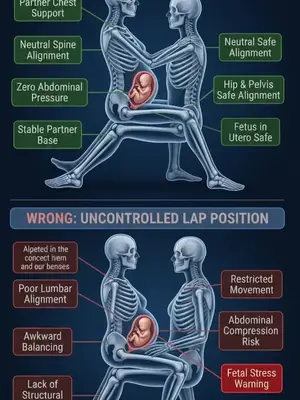
Pregnancy is a beautiful time of connection, and intimacy with your partner doesn’t have to end. However, as your body changes, so must your physical activities to ensure the absolute safety of your growing baby. The key to safe intimacy during pregnancy is understanding which positions are protective and which pose a risk.
The Golden Rule: Comfort is King
First, it’s crucial to understand that your baby is well-cushioned by the amniotic fluid, the strong muscles of the uterus, and your abdomen. For most healthy pregnancies, intercourse is safe. The primary rule is comfort; if a position causes you pain, shortness of breath, or pressure, stop immediately.
Safe Positions: Protecting the Belly
As your pregnancy progresses, positions that put weight on the abdomen become unsafe. The safest options relieve pressure and allow you to control depth and pace.
- Side-Lying (Spoons): This is often the most recommended position. Both partners lie on their sides, facing the same direction. This eliminates any pressure on the belly, allows for deep penetration without strain, and is comfortable for all trimesters.
- Woman on Top: In this position, you are in complete control. You can control the depth of penetration and the speed, allowing you to find the most comfortable angle while keeping all weight off your belly.
- Edge of the Bed: You can lie on your back near the edge of the bed while your partner stands or kneels on the floor. This allows for shallow penetration and keeps your abdomen free.
Positions to Avoid for Baby Safety
As the pregnancy advances, certain positions become unsafe due to the risk of pressure on the abdomen or the potential for air embolism (a rare but serious risk).
- Missionary (Woman on Bottom): As the belly grows, lying flat on your back is not recommended. This puts the weight of the uterus on major blood vessels (the vena cava), which can restrict blood flow to you and your baby.
- Any Position with Weight on the Belly: Avoid any position where your partner’s weight rests on your stomach.
- Deep Penetration Positions: Positions that allow for very deep penetration should be avoided as they can cause discomfort or bruise the cervix.
Important Warning Signs
Always listen to your body. Stop and consult your healthcare provider if you experience pain, bleeding, or a feeling of fluid leakage. Your baby’s safety is paramount, and a simple conversation with your partner about comfort can ensure that your intimacy remains a safe and joyful part of your pregnancy journey.