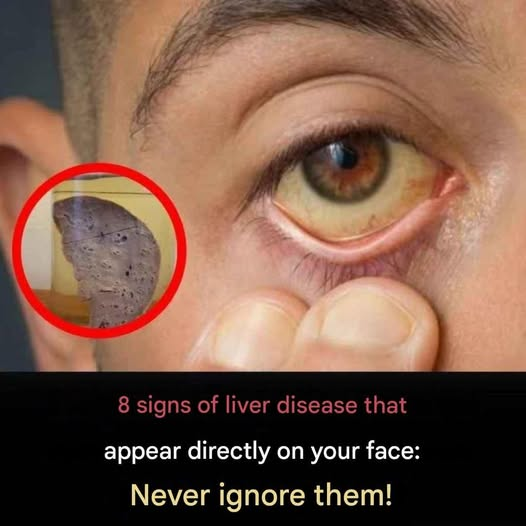
8 Facial Signs That May Indicate Liver Disease: Doctors Urge the Public Not to Ignore Them.
Liver disease is often called the “silent killer” because it doesn’t usually present obvious symptoms in its early stages. Many patients only discover it when it has progressed to severe inflammation, fibrosis, or even cirrhosis. However, according to hepatologists, the liver often sends early warning signals through the face; however, most people dismiss them as mere cosmetic issues or fatigue.
The following are eight facial symptoms that doctors say could be related to impaired liver function. While these signs alone do not confirm liver disease, they should prompt a timely medical evaluation, especially in people with risk factors such as obesity, excessive alcohol consumption, fatty liver, hepatitis, or metabolic disorders.
1. Yellowing of the skin and eyes.
Jaundice is one of the clearest signs of liver dysfunction. When the liver cannot process bilirubin, the pigment builds up in the blood, causing the skin and whites of the eyes to turn yellow. This symptom should never be ignored, as it usually indicates significant liver stress or a bile duct obstruction.
2. Dark and spotted skin on the face.
Discoloration or hyperpigmented spots around the cheeks or temples may be associated with hormonal imbalances caused by chronic liver problems. The liver is involved in hormone metabolism; when it weakens, changes in pigmentation can occur.
3. Persistent Facial Swelling:
When the liver has difficulty regulating the balance of proteins and fluids, excess fluid can accumulate. Morning puffiness around the eyes and face can be an early sign that the liver isn’t functioning properly.
4. Flushed face or “liver flush”
A flushed face, especially around the nose and cheeks, can be related to poor liver metabolism. When toxins accumulate in the bloodstream, facial blood vessels can dilate, giving the skin a reddish appearance.
5. Spider angiomas: These small, spider-like blood vessels that appear on the cheeks or nose are common in patients with cirrhosis or chronic liver inflammation. They result from elevated estrogen levels caused by impaired liver detoxification.
6. Dry, itchy skin on the face.
Chronic itching is associated with a buildup of bile acids in the body. If the skin becomes dry, itchy, or flaky, especially without an allergic cause, it may indicate cholestasis or other liver problems.
7. Frequent acne-like breakouts.
Liver dysfunction can disrupt hormone regulation, leading to increased oil production and recurring breakouts. When acne suddenly appears in adults who previously had clear skin, the liver may be under stress.
8. Dark circles and dull complexion.
A darkened and chronically tired complexion can reflect the liver’s reduced ability to detoxify the blood. Reduced oxygen supply to the tissues can cause the face to look fatigued, regardless of how well the person sleeps.
Why does the liver show warning signs on the face?
The liver filters toxins, regulates hormones, produces bile, and supports metabolic processes. When its function declines, toxins accumulate and hormonal imbalances occur, which can manifest externally, especially in the skin and facial blood vessels.
When to seek medical help
Doctors recommend immediate evaluation if several facial signs occur together, especially along with symptoms such as:
Fatigue
Loss of appetite
abdominal discomfort
Dark urine or pale stools
Unexplained weight loss
Early detection can identify fatty liver, hepatitis, or fibrosis before they progress to life-threatening stages.