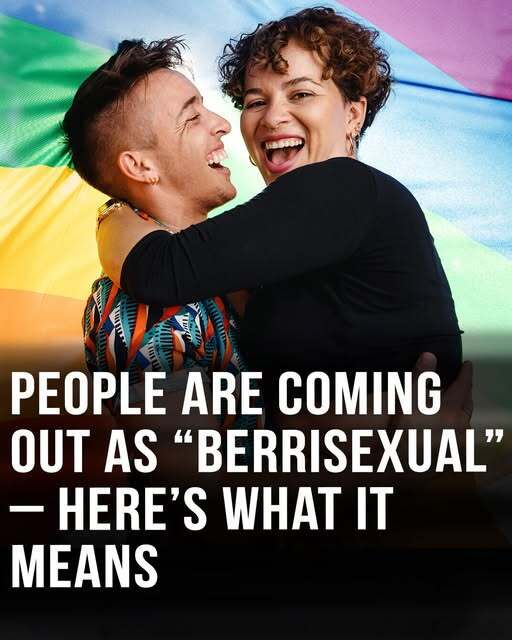
A growing number of people are discovering that traditional terms like bisexual or pansexual don’t always capture the subtle ways they experience attraction. In that space, a newer word has begun circulating online—berrisexuality—and for many, it feels like a meaningful fit.
Berrisexuality describes someone who can feel attraction toward people of any gender, yet finds that their strongest or most frequent pull tends to be toward women, feminine-presenting individuals, or those with a gentle, androgynous style.
Attraction to men or masculine-aligned people isn’t absent; it simply doesn’t appear as often or with the same depth.
For some, that distinction has been quietly present for years. They never felt fully at home under broader labels, which sometimes made their inner experiences feel flattened or oversimplified.
Why This New Term Matters to Some People
Online communities—especially forums, discussion groups, and identity-focused wikis—have played a large role in shaping and sharing the term. People often describe a sense of comfort when they first learn about it.
One commenter put it simply:
“Now I don’t have to choose between labels that don’t quite match. This one finally feels like home.”
For others, using a micro-label isn’t about replacing existing identities. It’s about having language that reflects the nuances they’ve always felt but never had words for. These smaller labels aren’t meant to be requirements, or tests, or boxes people must check. They’re optional tools—ways to describe one’s experience with more accuracy and personal meaning.
A Reminder About Identity and Choice
As the conversation grows, many people emphasize that identity language should never feel restrictive. No one needs to adopt a micro-label to be valid, and no one is obligated to use terms that don’t resonate. What matters most is whether a word helps someone understand themselves more clearly.
For those who’ve spent years feeling “close but not quite there” with existing definitions, berrisexuality offers something valuable: a way to talk about attraction that acknowledges its full complexity.
At the heart of this trend is a simple truth—people want words that let them express who they are without losing the details that make their experiences unique.