
A short courtroom clip circulating online details an unusual civil and criminal case in which a restaurant patron filed a $15,000 emotional distress claim against an establishment after deliberately causing a scene on the premises. The case, documented through surveillance footage, quickly turned against the claimant when the evidence revealed a carefully staged provocation rather than a genuine grievance.
The incident began when the man arrived at the restaurant and immediately raised complaints with staff, alleging that his table was being neglected by servers. Rather than waiting for management to address the concern through normal channels, he positioned himself near a passing waiter carrying a fully loaded service tray.
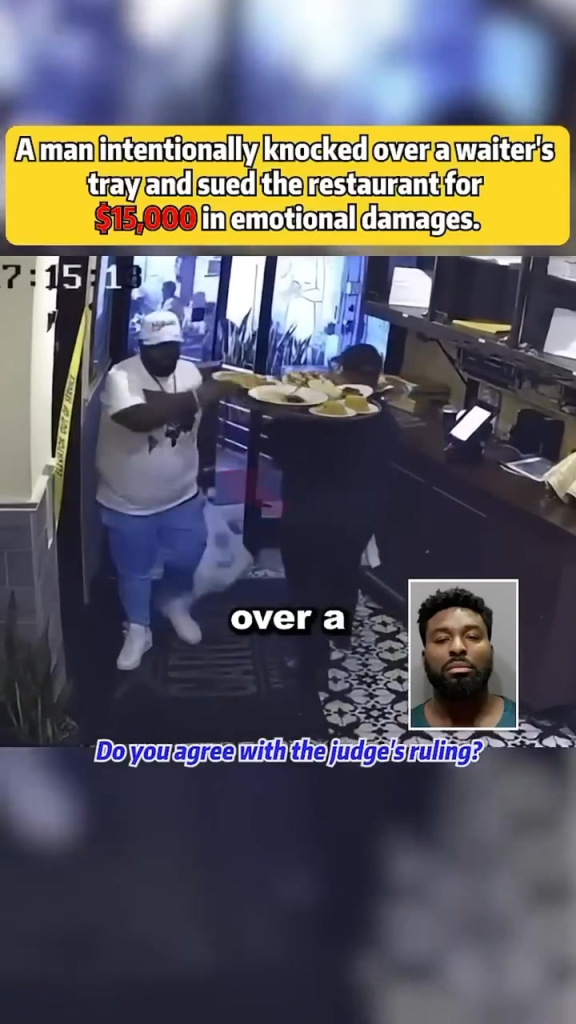
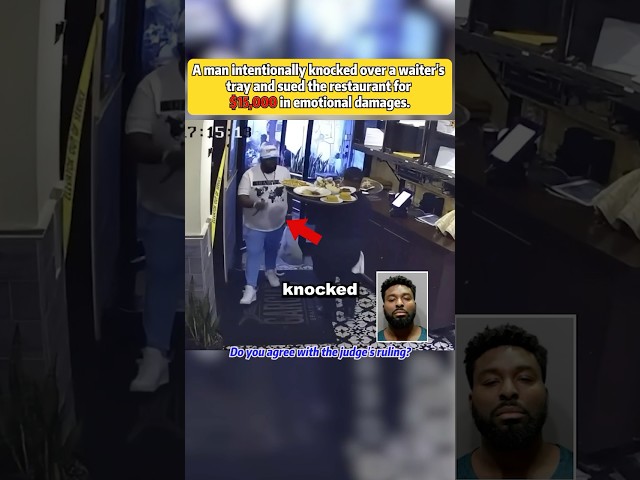
As the waiter moved through the dining area, the man deliberately extended his arm and knocked the tray from the server’s hands, sending dishes, food, and utensils scattering across the floor.
The dining room came to an immediate standstill. The man then exited the premises without speaking to management or acknowledging the disruption he had caused.

Shortly after leaving, he placed a call to the restaurant, informing ownership that he intended to pursue $15,000 in damages for emotional distress, claiming the incident had humiliated him and caused harm to his personal reputation.
Restaurant owner Luis Garcia confirmed receiving the demand and stated that the waiter, upon learning of the claim, flatly refused any suggestion of settlement. The restaurant’s position was that no compensation would be offered under any circumstances given the nature of the encounter.
What the man had not accounted for was the restaurant’s surveillance system. The footage captured the full sequence of events, from his initial argument with staff through to the deliberate knocking of the tray, and his subsequent departure from the scene.
Investigators reviewing the footage found no evidence that the waiter had used aggressive or inappropriate language during the exchange. The surveillance recording showed the claimant’s actions were not reactive or accidental but clearly deliberate and timed. Authorities concluded that the entire episode had been staged with the intent of establishing grounds for a financial claim.
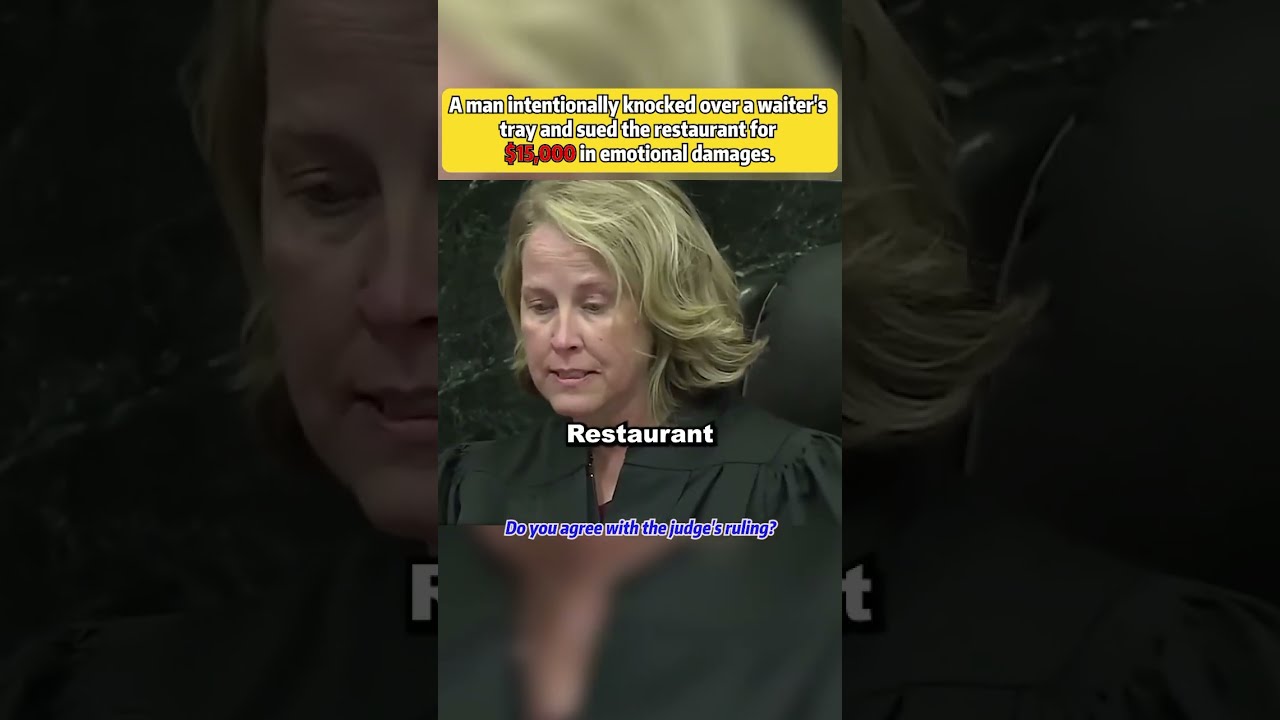
The court examined the footage alongside the timeline of the man’s post-incident phone call and determined that his conduct amounted to intentional property damage and a malicious legal claim.
The speed with which he contacted the restaurant following the incident reinforced the court’s assessment that the demand was premeditated rather than a genuine response to distress.
The court sentenced the man to 360 days in jail, rejecting the emotional distress claim in its entirety. The ruling reflected the judge’s determination that the claimant bore full and sole responsibility for any harm or embarrassment arising from the incident, having engineered the situation himself.
Garcia stated publicly that he was satisfied with the outcome, noting that the man had disrupted a working environment, wasted prepared food, frightened other customers, and then attempted to extract payment from the very establishment he had targeted. The restaurant’s staff, including the waiter directly affected, were reported to be relieved by the verdict.
Cases of this nature highlight a broader legal principle that emotional distress claims require a plaintiff to demonstrate that the distress was caused by the conduct of another party.
When surveillance footage or other evidence establishes that the claimant was the instigating party, courts have consistently denied such claims and, where criminal conduct is present, pursued separate criminal liability. The man’s sentence in this matter reflects both consequences operating simultaneously.
For those following the case, the full footage and courtroom outcome are available in the video below. Watch the full ruling below.