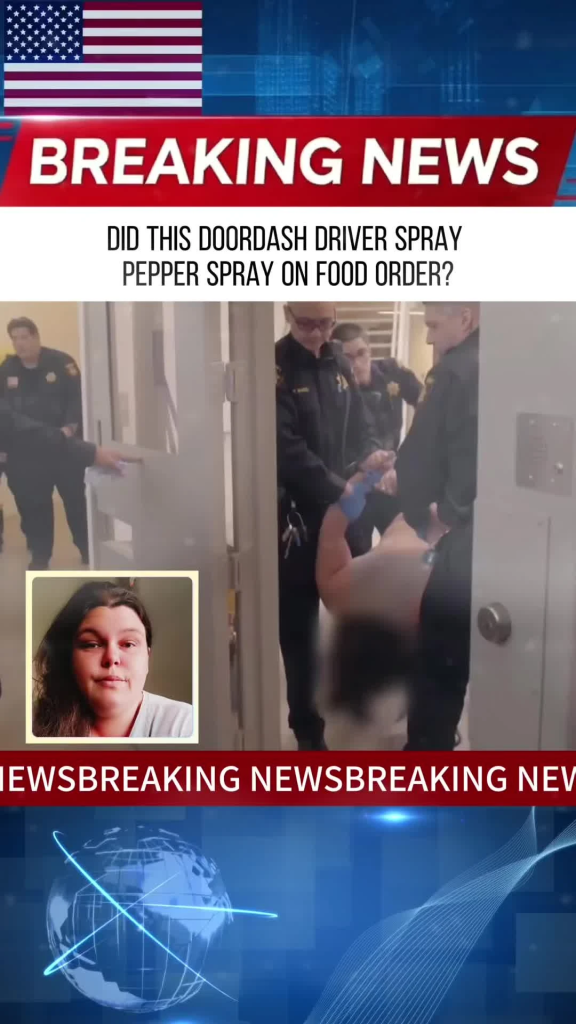
The convenience of modern app-based food delivery has completely transformed how families enjoy meals in the comfort of their homes. However, a deeply unsettling incident in Indiana has cast a dark shadow over this ubiquitous convenience.
What was supposed to be a routine evening dinner quickly turned into a terrifying household hazard for an unsuspecting couple. The disturbing event unfolded in the city of Evansville, Indiana, leaving a local family shocked and physically distressed.
The homeowner, identified as Mark Cardin, had utilized a popular mobile food delivery application to order a meal for his household. The order consisted of items from a local Arby’s restaurant, a common choice for a quick and easy evening dinner.
When the delivery driver arrived at the suburban residence, she followed the typical drop-off procedures requested by the platform. She carried the brown paper bag containing the food up the walkway and placed it carefully on the front porch.
As mandated by her delivery application, the female driver pulled out her smartphone to capture a confirmation photograph of the drop-off. This digital proof ensures that the platform and the consumer know the items have been successfully delivered to the correct location.
Up to this point, the transaction seemed entirely ordinary and devoid of any immediate red flags or visible confrontations. Yet, the moment the driver finished taking the confirmation photo, her demeanor completely changed into something far more malicious.
According to the home’s high-definition doorbell security camera, the driver did not immediately turn around to walk back to her vehicle. Instead, she paused for a brief moment and retrieved a hidden object from her clothing.
The crystal-clear footage captured the delivery worker holding a small canister, which was later identified as a personal self-defense weapon. She deliberately pointed the nozzle directly at the freshly delivered bag of food sitting on the porch floor.
With a sharp and calculated motion, she depressed the trigger and released a heavy mist of chemical spray over the entire package. The mist coated the exterior of the paper bag, settling onto the surfaces that the homeowners would inevitably touch.
After completing this shocking act of sabotage, the driver turned away and calmly walked back down the driveway toward her parked car. She left the property without dropping any hints about the hazardous substance she had just introduced to the family’s dinner.
Inside the home, Mark Cardin and his wife, Mandy, were eagerly awaiting the arrival of their dinner and opened the door shortly after. Completely unaware of the toxic residue lingering on the packaging, they brought the Arby’s bag directly into their kitchen.
Mandy was the first to handle the delivery, opening the paper bag to distribute the food items for consumption. Almost immediately after coming into contact with the contaminated order, she began experiencing severe and terrifying physical symptoms.
As she started to take her initial bites of the meal, a powerful burning sensation overwhelmed her respiratory track and throat. She suddenly began coughing violently, struggling to draw breath as the invisible chemical agents filled the immediate air around her.
The physical reaction quickly escalated from mild irritation to an absolute medical crisis within a matter of minutes. Mandy was gasping for air, clutching her chest as her body desperately tried to reject the toxic fumes emanating from the delivery.
The intense coughing and respiratory distress eventually triggered a severe bout of nausea, forcing her to throw up repeatedly in the kitchen. Her husband watched in absolute horror, initially unable to comprehend what was causing such a sudden and violent medical emergency.
Mark quickly rushed to his wife’s aid, trying to figure out what could have possibly caused such a rapid deterioration in her health. It was during this chaotic moment that he walked over to the kitchen counter to inspect the fast-food packaging closely.
As he leaned over the counter, Mark noticed a strange, distinct chemical odor radiating from the surface of the paper bag. He detected a visible residue that looked like a fine oily spray glistening under the bright overhead kitchen lighting.
The realization that something was deeply wrong with the delivery prompted Mark to immediately investigate further. He pulled out his own smartphone and accessed his home’s smart security system to review the exterior footage.
As he played back the recorded video from the exact minute of the delivery, the grim reality of the situation came to light. He watched the delivery woman meticulously spray their food bag with what appeared to be heavy-duty pepper spray.
The discovery left the family completely stunned, transforming their cozy kitchen into an active crime scene of intentional food tampering. They could hardly believe that a random delivery contractor would deliberately contaminate their meal with a weaponized chemical irritant.
The physical effects of the pepper spray exposure lingered in their home, requiring extensive ventilation to make the space safe again. Mandy’s recovery was a painful process, highlighting the real-world dangers of having household items compromised by external delivery workers.
When analyzing why such a malicious act would occur, a critical detail emerged from the transaction details on the app receipt. The customer’s digital receipt revealed that a gratuity of two dollars had been added to the overall order total.
The total cost of the fast-food order came out to nearly twenty-eight dollars, making the two-dollar tip a relatively low percentage. Many industry commentators believe that this low tip amount may have provoked the delivery driver’s extreme and unwarranted retaliation.
The issue of tipping culture within the gig economy has long been a subject of intense debate among consumers and contract workers. Delivery drivers frequently complain about low payouts, stating that tips are essential to offset their rising fuel and vehicle maintenance costs.
While frustration over small tips is a common sentiment expressed in online forums, crossing the line into physical retaliation is incredibly rare. The act of weaponizing pepper spray against a customer’s food supply represents an unprecedented escalation in delivery driver disputes.
This shocking incident underscores a growing tension between gig economy workers who feel underpaid and consumers who expect safe services. The reliance on third-party applications creates a unique dynamic where customers place immense trust in complete strangers entering their properties.
When a consumer places an order through an app, they expect that basic safety standards and background checks will protect them from harm. Incidents like the one in Evansville expose potential vulnerabilities in the vetting and monitoring processes used by major gig platforms.
Food safety experts note that pepper spray contamination on food packaging poses a significant health hazard to unsuspecting individuals. The active ingredients can easily transfer from the hands to the face, eyes, and mucous membranes, causing severe inflammation.
In worst-case scenarios, exposure to such chemical irritants can trigger life-threatening asthma attacks or severe allergic reactions. The fact that the contamination occurred in a private residence makes the violation feel incredibly personal and violating for the victims.
The footage of the incident quickly began circulating online, drawing widespread condemnation from the public and consumer advocacy groups alike. Viewers expressed outrage over the driver’s actions, calling for strict legal consequences and permanent bans from all delivery platforms.
The digital footprint left by the delivery application makes it highly efficient for investigators to track down the individual responsible. Because every transaction is logged with GPS data and driver profiles, escaping accountability for such actions is virtually impossible.
Major food delivery corporations have repeatedly stated that they maintain a zero-tolerance policy for any form of misconduct or safety violations. Following high-profile incidents, these platforms typically issue statements affirming their commitment to customer safety and cooperation with local law enforcement.
However, for many consumers, the psychological impact of seeing a delivery driver tamper with food lingers long after the corporate apologies. The fear that a disgruntled worker could secretly compromise a meal leaves a lasting impression on the minds of app users.
This specific case in Indiana will likely serve as a cautionary tale for both delivery platforms and the consumers who rely on them daily. It highlights the urgent need for robust safety features, better driver communication, and perhaps a reevaluation of how tipping affects service quality.
As the community of Evansville processes this disturbing event, the conversation around the gig economy continues to evolve rapidly. The fine line between a frustrated contract worker and a dangerous actor is a boundary that must be strictly policed to maintain public trust.
For Mark and Mandy, the simple act of ordering a quick dinner will never feel quite as safe or straightforward as it did before. The haunting image of the driver spraying their dinner bag remains a vivid reminder of the unpredictable nature of modern convenience services.
In the grander scheme, this event serves as a stark reminder of the human element present within automated and digital transactions. Behind every app interface are real individuals, and ensuring mutual respect between worker and consumer remains paramount for societal safety.
Ensuring that food remains untampered with from the restaurant kitchen to the front door is the core promise of any delivery service. When that chain of custody is broken so maliciously, it challenges the very foundation of the modern convenience economy.
As technology continues to integrate deeply into our daily lives, addressing these niche safety concerns will become increasingly vital for developers. The lessons learned from this unfortunate situation in Indiana could help shape future protocols designed to prevent similar threats entirely.
Ultimately, consumer awareness and robust home security systems play a vital role in identifying and exposing these rare but dangerous acts. Without the presence of the doorbell camera, the family might have never uncovered the true source of their sudden medical distress.
The ongoing discussions triggered by this event will undoubtedly influence how people approach delivery tips and home security moving forward. Ensuring safety in our private spaces remains a top priority that requires vigilance, accountability, and systemic adjustments across all digital platforms.
As the public demands greater oversight, delivery companies are forced to scrutinize their independent contractor networks more thoroughly than ever before. Striking a balance between rapid onboarding and comprehensive background screening remains one of the greatest challenges facing the tech sector today.
The resilience of families like the Cardins in speaking out about their experiences helps shed light on hidden dangers within everyday services. Their story acts as a vital wake-up call for an industry that moves millions of meals across the country every single day.
Moving forward, it is hoped that enhanced safety measures and stricter legal penalties will deter anyone else from committing such reckless acts. Protecting the sanctity of the home and the safety of the food we consume remains a non-negotiable standard for everyone.
In conclusion, the Evansville incident stands as a powerful testament to the importance of vigilance in the modern digital age. While convenience defines our current lifestyle, safety must always remain the ultimate priority that guides our interactions with the world around us.