Rockdale County Home Invasion Turns Deadly in Georgia As Stand Your Ground Debate Intensifies Rockdale County, Georgia has become the center of a national legal and emotional debate after a home invasion ended in fatal gunfire and widespread community shock. The incident has intensified discussion over self defense laws and the limits of reasonable force inside the home.
It began in a quiet residential neighborhood where residents say life typically moves without disruption or concern. Families describe evenings of porch lights, routine commutes, and children playing in driveways before the sense of safety was abruptly challenged.
According to authorities, three masked teenagers attempted a coordinated break in at a home in the area. Investigators say the group appeared to be carrying out a planned robbery that quickly escalated once they encountered resistance inside.
The homeowner was inside the residence when the break in occurred and became the central figure in a rapidly unfolding confrontation. Law enforcement says the situation escalated within moments, leaving little opportunity for retreat or negotiation.
Officials report that the confrontation moved from forced entry to a chaotic exchange involving gunfire. The sequence, according to investigators, developed so quickly that determining exact timing required careful reconstruction of physical evidence.
Neighbors later described hearing sudden noise that disrupted an otherwise ordinary night. One resident recalled lights turning on across the street as people tried to understand what was happening.
Police arrived shortly after emergency calls reported a serious incident inside the home. Officers secured the area while emergency responders tended to those injured in the confrontation.
Investigators say all three teenagers were struck during the incident, and the situation quickly became fatal. One teenager died at the scene while the other two were transported to a hospital in critical condition.
Despite medical intervention, both hospitalized teenagers later died from their injuries. The loss deepened the gravity of the case and expanded the emotional impact across multiple families.
Authorities confirmed that two of the deceased teenagers were brothers, aged 15 and 16. The third teenager was also a minor, underscoring how young everyone involved was in the incident.
Family members of the teenagers expressed shock and disbelief as they tried to process the sequence of events. Their statements reflected grief and a determination to pursue legal accountability in the aftermath.
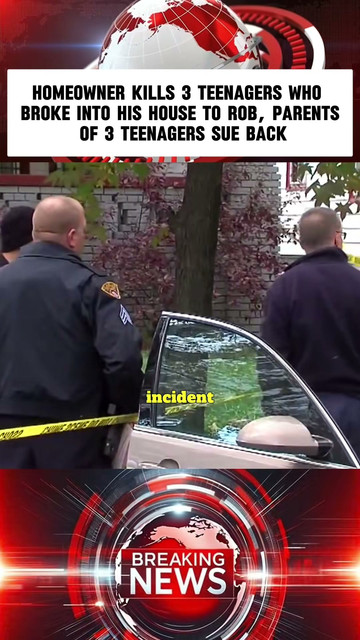
One relative described the situation as unimaginable, emphasizing how quickly the outcome unfolded from their perspective. Another family member questioned how the night escalated into irreversible loss.
The homeowner’s account became central to the investigation, with officials noting that he believed he was facing an immediate and serious threat. That perception played a key role in how law enforcement evaluated the incident.
Investigators conducted interviews, reviewed physical evidence, and reconstructed the timeline of the confrontation. They focused on how the break in began and what actions followed once the intruders entered the home.
Law enforcement ultimately concluded that the homeowner acted within Georgia’s self defense and stand your ground framework. Officials stated that the perception of imminent danger was supported by available evidence.
That legal determination meant the shooting was classified as justified under current state law. The decision effectively closed the criminal inquiry into the homeowner’s actions, though civil questions remained.
Still, the conclusion did not quiet public discussion. Instead, it amplified debate over how self defense laws apply when suspects are minors involved in serious criminal allegations.
Community members in Rockdale County have expressed a range of reactions since the incident. Some residents emphasize the fear a homeowner may experience during an unexpected intrusion.
Others question how a situation involving teenagers escalated so quickly into a fatal outcome. These residents have called for deeper discussion about prevention and intervention.
At a community gathering held days after the incident, neighbors spoke cautiously about safety concerns. One attendee said people now lock doors more frequently, even in daylight hours.
Another resident said the event changed how they view quiet neighborhoods, noting that assumptions of safety can shift in moments. The conversation reflected a mix of fear, sympathy, and uncertainty.
Legal analysts have pointed to Georgia’s stand your ground law as a central factor in understanding the case. The law removes a duty to retreat when a person reasonably believes they face an imminent threat.

In this case, investigators determined those conditions were met based on the evidence reviewed. That finding shaped the final law enforcement decision regarding justification.
However, legal experts also note that emotional responses often diverge sharply from legal conclusions. A case can be legally resolved while remaining socially and morally contested.
Online reactions have reflected that divide in stark contrast. Some users argue the homeowner had no alternative under the circumstances described by investigators.
Others focus on the tragedy of young lives lost and the broader social issues surrounding youth involvement in serious crime. These discussions often extend beyond the facts of the case into wider cultural debate.
Local leaders have urged the community to avoid escalating tensions as discussions continue online and in person. They emphasize that grief and legal findings can coexist in complex and uncomfortable ways.
One community organizer said the priority now is preventing further division while acknowledging the pain experienced by all families involved. The statement reflected concern about growing polarization.
Residents have also begun discussing broader questions about what leads teenagers into high risk situations. Some point to gaps in supervision, opportunity, and community support systems.
Others caution against drawing conclusions too quickly, stressing that each case involves unique circumstances. The conversation remains ongoing and emotionally charged.
For the homeowner, the incident is described by officials as a moment of survival under extreme pressure inside his own residence. That framing reflects the legal interpretation reached by investigators.
For the families of the teenagers, the same event represents irreversible loss and unanswered questions about how it unfolded. Their perspective continues to shape calls for further scrutiny.
Rockdale County now finds itself at the intersection of law, grief, and public debate. The neighborhood that once felt routine and uneventful has become a focal point for national conversation.
As the case continues to circulate, interpretations remain divided between legal justification and emotional tragedy. The incident has left a lasting imprint on a community still trying to understand what it has witnessed.