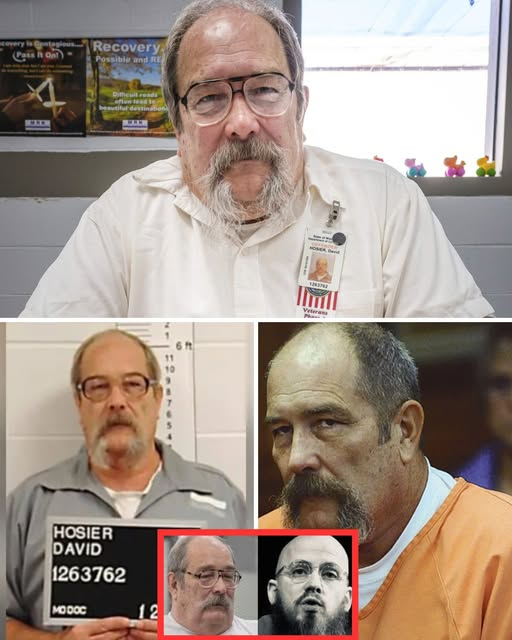
David Eugene Hosier was executed by lethal injection on June 11, 2024, at the Eastern Reception, Diagnostic and Correctional Center in Bonne Terre, Missouri, for the 2009 murders of Angela Gilpin and her husband, Rodney Gilpin. The execution came after more than fifteen years of legal proceedings, appeals, and post-conviction challenges that ultimately failed to overturn his conviction or death sentence.
Prosecutors said the murders stemmed from Hosier’s prior romantic relationship with Angela Gilpin. According to trial evidence, Hosier became angry after the relationship ended and traveled from Oklahoma to Jefferson City, Missouri, where the Gilpins lived. On September 26, 2009, Angela and Rodney Gilpin were shot to death outside their home. Investigators later linked Hosier to the crime through evidence that included a firearm connected to the murders, ammunition, and witness testimony presented during the trial.
In 2010, a Missouri jury convicted Hosier of two counts of first-degree murder and recommended a death sentence. During the years that followed, his attorneys pursued numerous appeals in state and federal courts, arguing that constitutional violations occurred during the investigation and trial. Hosier also maintained that he was innocent and claimed investigators failed to properly consider evidence that could have supported alternative theories of the crime. Courts consistently rejected those arguments and upheld both the conviction and sentence.
As the scheduled execution date approached in June 2024, Hosier’s legal team filed emergency motions seeking additional review. Among the issues raised were claims related to evidence handling and the fairness of prior proceedings. Missouri courts, federal courts, and ultimately the United States Supreme Court declined to halt the execution, exhausting Hosier’s remaining legal options.
On the evening of June 11, Hosier was brought into Missouri’s execution chamber. Witnesses reported that he remained composed and continued to insist he had been wrongfully convicted. Rather than expressing remorse for the murders, he used his final statement to criticize the legal system and those involved in his prosecution. Missouri Department of Corrections officials later confirmed that the lethal injection process was completed and that Hosier was pronounced dead shortly after the procedure began.
The execution marked Missouri’s first execution of 2024 and reignited debate surrounding capital punishment, innocence claims, and the role of post-conviction appeals in death penalty cases. Supporters of the sentence argued that multiple courts reviewed the evidence and reached the same conclusion regarding Hosier’s guilt, while critics pointed to his continued claims of innocence as an example of why death penalty cases remain among the most controversial issues in the American criminal justice system. More than fifteen years after Angela and Rodney Gilpin were killed, the case remains a subject of discussion among legal observers, victims’ advocates, and opponents of capital punishment alike.