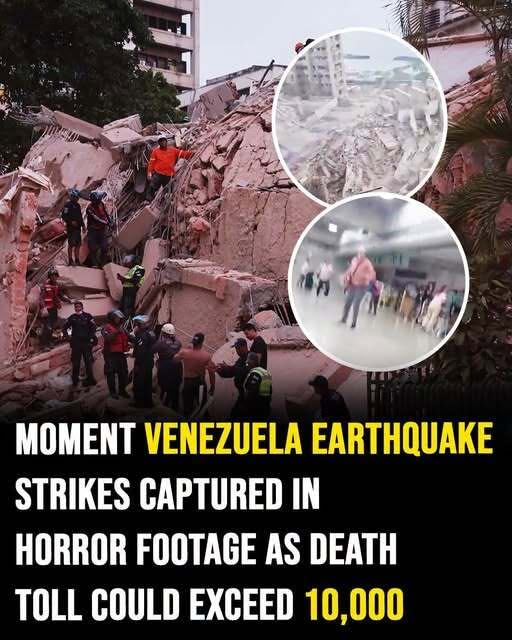
Venezuela is facing one of its most challenging natural disasters in recent history after two powerful earthquakes struck the country’s northern region within seconds of each other, causing widespread destruction, damaging critical infrastructure, and triggering a large-scale emergency response.
The back-to-back earthquakes, measured at magnitudes 7.2 and 7.5, shook communities across northern Venezuela, with the strongest impacts reported near the coastal city of Morón and extending into the capital, Caracas. Buildings collapsed, roads cracked, and emergency services rushed into action as residents fled into open spaces seeking safety. Authorities continue to assess the full extent of the damage while search-and-rescue operations remain underway. Recent official reports indicate at least dozens of confirmed fatalities and hundreds of injuries, but officials caution that the numbers may change as crews reach additional affected areas. Some preliminary estimates have suggested the final toll could be significantly higher, though those figures have not been confirmed by authorities. Rescuers continue searching damaged buildings for survivors. Throughout the affected regions, communities are working together to provide shelter, medical assistance, and support for those displaced by the disaster.
Two Powerful Earthquakes Strike Within Seconds
According to seismic monitoring agencies, the first earthquake measured approximately magnitude 7.2 before a stronger magnitude 7.5 earthquake followed less than a minute later. The shallow depth of both events contributed to intense shaking across a large area, increasing the potential for structural damage.
Residents described the experience as sudden and overwhelming. Buildings swayed violently, power outages occurred in several locations, and people quickly evacuated homes, offices, shopping centers, and public buildings.
The earthquakes were felt well beyond Venezuela’s borders, with reports of shaking in neighboring countries and across parts of the Caribbean.
Coastal Communities Among the Hardest Hit
Several communities along Venezuela’s northern coastline experienced severe structural damage.
In Morón and surrounding areas, emergency responders found collapsed residential buildings, damaged businesses, and debris blocking streets. Rescue crews immediately began searching through unstable structures while carefully working to locate survivors.
Local officials reported that many families were forced to leave damaged homes, spending the night outdoors or in temporary shelters established by emergency authorities.
As engineers inspect buildings for safety, some neighborhoods remain inaccessible because of damaged roads and concerns about additional collapses.
Caracas Experiences Significant Damage
Although the earthquakes originated west of the capital, Caracas also experienced powerful shaking.
Witnesses described seeing dust clouds rising above neighborhoods where portions of buildings collapsed. Emergency personnel were dispatched throughout the city to evaluate structural damage, assist injured residents, and secure dangerous areas.
Authorities temporarily suspended several public services while inspections continued, urging residents to avoid damaged structures until engineers could determine whether buildings remained safe.
Hospitals across the capital received injured individuals requiring treatment, while medical teams expanded emergency capacity to manage the increased demand.
Damage Reported at Major International Airport
Among the most significant infrastructure impacts was damage reported at Simón Bolívar International Airport near Caracas.
Officials temporarily suspended airport operations after sections of the facility sustained structural damage during the earthquakes. Runways, terminals, and other infrastructure required immediate inspection before flights could safely resume.
The airport closure disrupted both domestic and international travel, affecting thousands of passengers and complicating the arrival of emergency assistance.
Authorities have stated that restoring transportation infrastructure remains a high priority as humanitarian supplies and rescue personnel continue arriving from both within Venezuela and abroad.
Search-and-Rescue Operations Continue Around the Clock
Emergency response teams have been working continuously since the earthquakes struck.
Firefighters, police officers, military personnel, medical professionals, and trained rescue specialists have joined coordinated operations across multiple affected communities.
Heavy equipment is being used where conditions allow, while specialized rescue teams carefully search unstable buildings by hand to avoid further collapse.
Search dogs trained to detect survivors beneath debris have also been deployed to several locations.
Rescuers face difficult conditions, including damaged roads, unstable structures, disrupted communications, and ongoing aftershocks that require periodic evacuations of rescue sites.
Despite these challenges, emergency crews continue working in hopes of locating additional survivors.
Communities Open Shelters for Displaced Families
Thousands of residents have been displaced after homes became unsafe or were destroyed.
Schools, sports facilities, community centers, and public buildings have been converted into temporary shelters where families can receive food, water, medical care, and a safe place to stay.
Volunteers from local organizations have helped distribute essential supplies while assisting elderly residents, children, and individuals with special medical needs.
Many communities have also organized donation drives to provide clothing, blankets, hygiene products, and other necessities for those affected.
International Assistance Begins to Arrive
Following the disaster, several countries and humanitarian organizations expressed support for Venezuela’s recovery efforts.
International rescue teams equipped with specialized search equipment, emergency medical supplies, and disaster response expertise have begun traveling to affected areas.
Medical personnel, engineers, and humanitarian workers are expected to assist with emergency healthcare, damage assessments, and relief operations as recovery efforts continue.
International cooperation often plays an important role following major natural disasters by providing additional personnel and resources during the critical first days after an event.
Aftershocks Create Ongoing Concerns
Following major earthquakes, aftershocks are common and can continue for days or even weeks.
Authorities have encouraged residents to remain cautious, especially near damaged buildings that could become unstable during additional seismic activity.
Emergency management officials continue monitoring seismic conditions while advising the public to follow official safety guidance and evacuation instructions if necessary.
Many families have chosen to remain outdoors overnight because of concerns about additional tremors.
Assessing the Full Extent of the Damage
Determining the complete impact of a disaster of this scale takes time.
Engineers must inspect thousands of buildings before they can be declared safe for occupancy. Utility crews are working to restore electricity, water, communications, and transportation services in affected communities.
Officials also continue collecting information from remote areas that may have experienced damage but remain difficult to access because of blocked roads or communication interruptions.
As additional assessments are completed, official casualty and damage figures may change.
Recovery Will Continue Long After Rescue Efforts End
While the immediate priority remains saving lives and assisting survivors, long-term recovery will require significant planning and resources.
Communities affected by major earthquakes often face months or years of rebuilding damaged homes, businesses, schools, hospitals, transportation networks, and public infrastructure.
Recovery also includes providing emotional support and counseling services for individuals coping with the effects of experiencing a major natural disaster.
Government agencies, humanitarian organizations, local volunteers, and international partners are expected to play important roles throughout the rebuilding process.
A Reminder of Nature’s Power
Earthquakes occur when accumulated stress within the Earth’s crust is suddenly released along geological faults. Although modern monitoring systems can quickly detect earthquakes, scientists cannot currently predict the exact time and location of major seismic events.
Preparedness, resilient infrastructure, public education, and effective emergency response remain among the most important tools for reducing the impact of future earthquakes.
For many Venezuelan communities, the coming weeks will focus on rescue operations, humanitarian assistance, damage assessment, and beginning the long process of recovery. While officials continue gathering accurate information about the disaster, emergency responders remain committed to helping affected families and supporting communities as they rebuild after one of the country’s most powerful recent seismic events.